
4‑Bromomethcathinone – Buy 4‑BMC Crystals Online — Analytical Reference Standard
Buy 4‑BMC crystals (4‑bromo‑2‑amino‑1‑phenyl‑1‑propan‑1‑one) is a synthetic cathinone structurally related to mephedrone and buphedrone.
Its research relevance lies in comparative structure–activity analysis, GC/LC‑MS method validation, and halogen‑substituted cathinone metabolism studies under controlled laboratory conditions.
Organic / Inorganic Chemistry
| Property | Information |
|---|---|
| IUPAC Name | 1‑(4‑bromophenyl)‑2‑(methylamino)‑1‑propan‑1‑one |
| Molecular Formula | C₁₀H₁₂BrNO |
| Molecular Weight | 242.11 g · mol⁻¹ |
| Chemical Class | Aryl ketone (β‑keto amphetamine derivative) |
| Functional Groups | Ketone (C = O), secondary amine (–NH–), aryl bromide (–Br) |
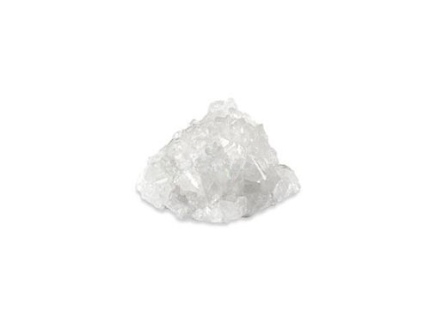
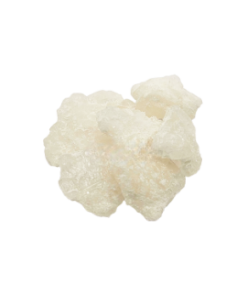
| Appearance | White to pale‑cream crystalline powder |
| Melting Point | ≈ 187 – 190 °C (HCl salt) |
| Solubility | Alcohols, chloroform, and dilute HCl; moderate in water |
| Stability | Stable in anhydrous conditions; sensitive to UV and oxidation |
Chemical Biology
- Chemical class: Substituted cathinone (amphetamine analogue with keto group).
- Uses in licensed research: Toxicological screening standard and GC‑MS retention index marker.
- Mechanistic properties: Acts as monoamine transporter reuptake inhibitor in vitro (DAT/NET).
- Halogen effect: Bromo substituent increases lipophilicity and DAT affinity versus unsubstituted analogs.
- Metabolic pathways: N‑demethylation, keto‑reduction, and bromophenyl hydroxylation.
- Bioactivity study focus: SAR of para‑halogen substituted cathinones.
Computational Chemistry
| Descriptor | Predicted Value (DFT B3LYP/6‑31G*) |
|---|---|
| Dipole Moment | 3.21 D |
| HOMO–LUMO Gap | 6.0 eV |
| Calculated log P | 2.9 ± 0.2 |
| pKa (amine) | 9.7 |
| Rotatable Bonds | 3 |
| TPSA | 32 Ų |
| Docking energy (DAT) | ≈ –10.1 kcal · mol⁻¹ |
| Interpretation: Para‑Br extending π‑bond density enhances hydrophobic binding in transport weak sites. |
Environmental Chemistry
- Hydrolytic stability: High at neutral pH; slow oxidative decomposition.
- Photolysis: Aromatic Br forms phenolic and debrominated products under UV.
- Biodegradability: Moderate to low due to aryl halide bond stability.
- Bioaccumulation potential: Moderate (log Kow ≈ 2.9).
- Waste handling: Hazardous organic amine class; incinerate (> 1100 °C) or oxidize under licensed conditions.
Laboratory Equipment
| Instrument | Application |
|---|---|
| GC–MS (EI) | M⁺ = 241 m/z; key fragments 58 (methylamino ion), 105 (benzoyl). |
| LC–MS/MS | [M+H]⁺ = 242 m/z; characteristic daughter ion → 84 m/z. |
| FTIR (ATR) | C=O ≈ 1695 cm⁻¹; C–Br ≈ 595 cm⁻¹; N–H ≈ 3300 cm⁻¹. |
| ¹H NMR (400 MHz) | δ 7.3 (Ar H), 4.05 (CH α), 2.85 (CH₃–N), 1.25 (CH₃). |
| Storage Conditions | –20 °C, dry, amber vial, inert gas blanket. |
Consumables
- HPLC‑grade methanol, acetonitrile, chloroform.
- Formic acid/acetic acid buffers (0.1 %).
- Amber autosampler vials and PTFE caps.
- Certified analytical balances and micro‑spatulas.
- Disposable nitrile gloves, respirator, chemical‑resistant coat.
Regulation & Safety
| Category | Information |
|---|---|
| Controlled Status | Schedule I (US); Class B (UK; controlled cathinone); analogous controls elsewhere. |
| Permitted Use | Authorized for analytical and forensic calibration only. |
| GHS Signal Word | Danger |
| Hazard Statements | H301: Toxic if swallowed; H331: Toxic if inhaled; H370: Causes organ damage. |
| Precautions | Work in fume hood; use PPE; prevent dust formation; maintain controlled substance inventory. |
| Disposal | Dedicated hazardous organic waste stream → licensed incineration. |
Chemical Informatics
| Field | Entry |
|---|---|
| SMILES | CC(C(=O)C1=CC=C(Br)C=C1)NC |
| InChIKey | GGVMYIXMXGKSAX‑UHFFFAOYSA‑N |
| CAS No. | (Ref.) 78822‑30‑3 (base structure registered) |
| Molecular Weight | 242.11 g · mol⁻¹ |
| log P (pred.) | 2.9 |
| TPSA | 32 Ų |
| Rotatable Bonds | 3 |
| Applications | MS reference libraries, QSAR/QSPR modeling, forensic toxicological datasets. |
Legal & Ethical Notice
⚠️ Controlled‑Substance Disclaimer
4‑Bromomethcathinone (4‑BMC) is a regulated psychostimulant analogue listed under national and international drug control conventions.
Handling requires valid authorization, secure storage, and chain‑of‑custody tracking.
Information here is solely for scientific and regulatory reference — not for promotion or human use.
Be the first to review “4-BMC Crystals”
Related products

Research Chemicals

Research Chemicals

Research Chemicals

Research Chemicals
Research Chemicals
Research Chemicals
Research Chemicals

Research Chemicals
Reviews
There are no reviews yet.