

Buy 4-CL-PVP Crystals Online – (4‑chloro‑α‑pyrrolidinovalerophenone) — Analytical‑Grade Crystalline Reference Material
Buy 4-CL-PVP Crystals (4‑chloro‑α‑pyrrolidinovalerophenone) is a synthetic cathinone analogue in the α‑pyrrolidinophenone class.
It is investigated under strictly licensed research for its structure–activity relationships (SAR) and mass‑spectrometric reference profiling, related to pyrovalerone and α‑PVP series compounds.
Organic / Inorganic Chemistry
| Property | Details |
|---|---|
| IUPAC Name | 1‑(4‑chlorophenyl)‑2‑(pyrrolidin‑1‑yl)pentan‑1‑one |
| Synonyms | 4‑CL‑α‑PVP; 4‑chloropyrolidinovalerophenone |
| Molecular Formula | C₁₅H₂₀ClNO |
| Molecular Weight | 265.78 g · mol⁻¹ |
| Structure Type | Aromatic ketone (cathinone) with pyrrolidine ring substitution |
| Functional Groups | Aryl chloride (–Cl), ketone (C = O), tertiary amine (pyrrolidine) |
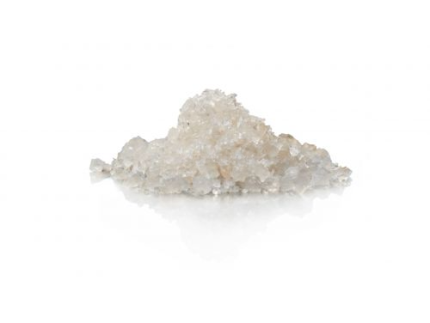
| Physical State | Crystalline solid (white to beige) |
| Melting Point (HCl form) | ≈ 192 – 195 °C |
| Solubility | Slightly soluble in water; freely soluble in methanol and chloroform |
| Stability | Stable under anhydrous conditions; sensitive to UV and oxidation. |
Chemical Biology
- Class: Synthetic cathinone (structurally related to α‑PVP and MDPV).
- Research purpose: Analytical toxicology, chromatography calibration, and SAR of halogenated cathinones.
- Mechanistic profile: Acts as reuptake inhibitor at dopamine and norepinephrine transporters in vitro.
- Effect of chlorine substitution: Increases lipophilicity and binding residence time at DAT/NET.
- Enzymatic metabolism: Reduction of ketone → secondary alcohol; hydroxylation on pyrrolidine ring → lactam formation possible.
- Toxicology focus: Reactive oxygen species formation and neurocytotoxicity pathways monitoring.
Computational Chemistry
| Computational Descriptor | Predicted Value (DFT B3LYP/6‑31G*) |
|---|---|
| Dipole Moment | 3.10 D |
| HOMO–LUMO Gap | 5.9 eV |
| log P (pred.) | 3.4 ± 0.2 |
| pKa (pyrrolidine) | 10.7 |
| Topological Polar Surface Area | 32 Ų |
| Rotatable Bonds | 5 |
| Docking Affinity (DAT) | ≈ –10.2 kcal · mol⁻¹ |
| Interpretation: Electron‑withdrawing Cl decreases ring density, enhancing π–π and van der Waals fit to DAT binding pocket. |
Environmental Chemistry
- Photolytic stability: Moderate; UV exposure forms chlorophenone and amino‑ketone byproducts.
- Hydrolysis: Stable in neutral; degrades slowly under acidic conditions.
- Biotransformation in waste water: N‑dealkylation and ring open products detected at low levels.
- Persistence: Fluoro/chloro‑aromatic compounds show slow biodegradation.
- Waste management: Collect all residues as hazardous organic amines — destroy via licensed high‑temperature incineration.
Laboratory Equipment
| Instrument | Analytical Purpose |
|---|---|
| GC‑MS (EI) | M⁺ = 265 m/z; diagnostic ions at 126, 98, 84 m/z. |
| LC–MS/MS | [M+H]⁺ = 266 m/z; MS² fragment 98 (pyrrolidine ion). |
| FTIR (ATR) | C=O ≈ 1690 cm⁻¹; C–Cl ≈ 1030 cm⁻¹; N–CH₂ ≈ 1120 cm⁻¹. |
| ¹H NMR (400 MHz) | δ 7.30 (Ar H), 4.25 (CH₂–N), 2.90 (CH₂), 1.10 (CH₃). |
| Storage | ≤ –20 °C in sealed amber glass; dry nitrogen atmosphere. |
Consumables
- HPLC‑grade methanol and acetonitrile.
- Formic acid (0.1 %) for LC‑MS mobile phase.
- Amber autosampler vials to avoid photo‑chlorination.
- Certified microbalance dispensing scoops.
- Class A volumetric flasks.
- PPE — lab coat, chemical‑resistant gloves, FFP2 mask, eye protection.
Regulation & Safety
| Category | Information |
|---|---|
| Controlled Status | Schedule I (US), Class B (UK — Cathinone derivative), Schedule 9 (Australia). |
| Authorized Uses | Analytical and forensic calibration only, under appropriate license. |
| GHS Signal Word | Danger |
| Hazard Statements | H301 (Toxic if swallowed); H331 (Toxic if inhaled); H370 (Causes organ damage). |
| Precautionary Measures | Avoid dust generation; use certified fume hood; strict controlled inventory and chain‑of‑custody. |
| Disposal | Inert absorbent + sealed container → licensed chemical incineration (>1100 °C). |
Chemical Informatics
| Field | Entry |
|---|---|
| SMILES | CCCC(C(=O)C1=CC=C(Cl)C=C1)N2CCCC2 |
| InChIKey | OJZGBEBAFMESJM‑UHFFFAOYSA‑N |
| Molecular Weight | 265.78 g · mol⁻¹ |
| log P (pred.) | 3.4 |
| TPSA | 32 Ų |
| Rotatable Bonds | 5 |
| CAS Number (ref.) | 79099‑52‑8 or analogue registry, varies by salt form. |
| Applications (informatics) | QSAR/QSPR datasets, mass‑spectrometric reference libraries, toxicokinetic modelling. |
Legal & Ethical Notice
⚠️ Controlled‑Substance Notice
4‑Chloro‑α‑pyrrolidinovalerophenone (4‑CL‑PVP) is classified as a prohibited substance in most jurisdictions.
Handling requires appropriate schedule licensing, secure storage, and regulatory oversight.
This document serves only for scientific record and regulatory training — not for promotion, supply, or human consumption.
Be the first to review “4-CL-PVP Crystals”
Related products

Research Chemicals

Research Chemicals

Research Chemicals

Research Chemicals
Research Chemicals
Research Chemicals
Research Chemicals

Research Chemicals
Reviews
There are no reviews yet.