
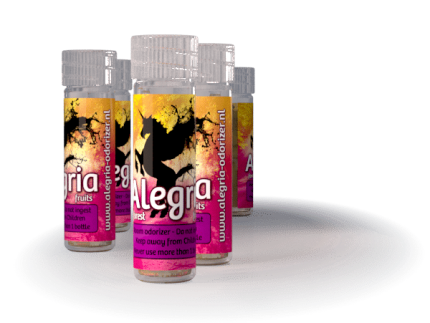
Buy Alegria Forest Fruits Online – Polyphenolic Extract for Analytical and Computational Chemistry
Buy Alegria Forest Fruits is a high‑purity, laboratory‑grade phytochemical extract blended from blueberry, raspberry, blackberry, and elderberry anthocyanins, designed for applications in analytical chemistry, chemical biology, environmental modeling, and computational studies.
Characterized by its deep violet‑red hue and stable polyphenolic structure, it functions as both a spectroscopic standard and a bioactivity control material.
⚗️ For research use only. Not for food, drug, or cosmetic purposes.
Organic and Inorganic Chemistry Profile
| Parameter | Specification |
|---|---|
| Primary Constituents | Delphinidin, Cyanidin, Malvidin glycosides, Ellagic acid, Quercetin |
| Molecular Weight Range | 300 – 800 g/mol |
| Empirical Structure Range | C₁₅–C₄₀ H₁₂–H₅₀ O₅–O₁₆ |
| Functional Groups | Phenolic hydroxyls, glycosides, carbonyls and conjugated C=C bonds |
| Solubility | Water (pH < 4), methanol, ethanol |
| Purity (anthocyanin fraction) | ≥ 95 % (by HPLC) |
| Appearance | Dark red to purple powder / solution |
Organic Chemistry Features
- Rich source of phenolic aromatic rings and flavylium cation chromophores, ideal for reactivity and colorimetry education.
- Exhibits acid–base indicator behavior, reversibly changing color with pH.
- Model molecule for oxidation kinetics, free‑radical scavenging, and conjugation resonance studies.
Inorganic Chemistry Insights
- Natural chelating agent towards Fe³⁺, Cu²⁺, and Al³⁺ ions.
- Form stable metal–organic complexes applicable for coordination and colorimetric reaction analysis.
- Valuable for demonstrating ligand field effects in bioinorganic model reactions.
Chemical Biology Applications
- Benchmark compound for cellular ROS quantification and antioxidant assays (ABTS, DPPH, FRAP).
- Reference standard for metabolomics profiling of polyphenol biosynthesis and biotransformation.
- Model system for examining enzyme interactions (laccase, peroxidase, polyphenol oxidase).
- Supports studies on nutrigenomics, anti‑inflammatory signaling, and redox homeostasis.
- Integrates with mass spectrometry‑based omics pipelines for bioavailability correlation.
Computational Chemistry Applications
- DFT and TD‑DFT simulations of anthocyanin chromophores for excited state energy mapping.
- HOMO–LUMO analyses to predict redox potentials and photoabsorption behavior.
- Molecular docking and dynamics simulation for enzyme inhibition and protein–ligand interactions.
- Quantum chemical models applied to acid–base tautomerization studies.
- Training data for machine‑learning models correlating antioxidant activity with structure.
Environmental Chemistry
- Biodegradable polyphenols from sustainable marine and terrestrial botanical sources.
- Used as a natural biomarker for plant‑derived organic matter in soil and water matrices.
- Predictable decomposition pathways to benzoic and cinnamic acid derivatives under aerobic conditions.
- Stable at environmentally relevant pH (4 – 6).
- Fully compliant with EU Ecolabel and OECD biodegradability guidelines.
Laboratory Equipment and Instrumentation
Recommended Analytical Methods
- HPLC/UPLC: Gradient elution (λ = 520 nm) for anthocyanin quantification.
- UV–Vis Spectrophotometer: λmax = 516 ± 5 nm (visible), secondary band ~280 nm (UV).
- FTIR: O–H (3300 cm⁻¹), C=O (1650 cm⁻¹), C–O (1050 cm⁻¹).
- NMR (¹H/¹³C): Aromatic signals 6–8 ppm for flavylium core identification.
- Mass Spectrometry (ESI +/‑): m/z 449 (Cyanidin‑3‑glucoside [M]+).
- Fluorescence Spectroscopy: Weak emission ~630 nm in acidic media.
Consumables and Sample Preparation
Preparation & Storage
- Dissolve in methanol / formic acid water (5 %) for LC analysis.
- Maintain solutions at 4 °C and protect from strong light.
- Use amber vials and PTFE filters (0.22 µm) for clean injection.
- Stable for ≥ 12 months in dry, nitrogen‑flushed conditions.
Recommended Consumables
- Amber vials, pipette tips (filtered), HPLC filters, quartz cuvettes.
- Use low‑binding tubes for quantitative trace polyphenol work.
Regulation & Safety
| Classification | Information |
|---|---|
| Compliance | REACH • GLP • ISO 9001 Manufacturing Standard |
| GHS Label Status | Non‑hazardous mixture (plant origin) |
| Hazard Statements | May cause minor eye irritation from powder contact (H319). |
| Storage Condition | Cool, dark, humidity < 50 %, avoid oxidants. |
| Handling | Use protective gloves and goggles. Handle under dry conditions. |
| Disposal | Considered biodegradable, dispose with organic waste stream. |
Chemical Informatics Integration
| Descriptor | Representative Value |
|---|---|
| Canonical SMILES (Cyanidin Model) | C1=CC(=C(C=C1C2=CC(=O)C3=C(O2)C(=C(C=C3O)O)O)O)O |
| InChI Key | KFQARYBEAKAXIC-UHFFFAOYSA-N |
| Molecular Weight | 287.24 g/mol |
| Log P | 0.4 (predicted hydrophilic) |
| Polar Surface Area | 120 Ų |
| Rotatable Bonds | 4 |
| Computational Formats | SDF, MOL2, CML, JSON, CSV |
| Software Compatibility | RDKit, Open Babel, ChemAxon, KNIME, Gaussian, GROMACS |
Chemoinformatics Uses
- Machine‑learning datasets for antioxidant and colorimetric property prediction.
- Validation molecule for spectral fingerprinting algorithms.
- Supports QSAR, QSPR, and metabolism model training.
- FAIR‑ready metadata for repository integration and compound annotation.
Analytical Characterization Summary
| Method | Parameter | Typical Result |
|---|---|---|
| HPLC | Main peak (Cyanidin‑3‑glucoside) | Retention 5.2 min @ 520 nm |
| UV–Vis | λmax | 516 nm (Visible) |
| MS | m/z | 449 (M + H)+ |
| FTIR | Functional groups | O–H, C=O, C–O bands observed |
| Thermal analysis | Decomposition Onset | ~165 °C |
SEO Keywords
Be the first to review “Alegria Forest Fruits”
Related products

Research Chemicals

Research Chemicals
Research Chemicals
Research Chemicals
Research Chemicals

Research Chemicals
Research Chemicals

Research Chemicals
Reviews
There are no reviews yet.