
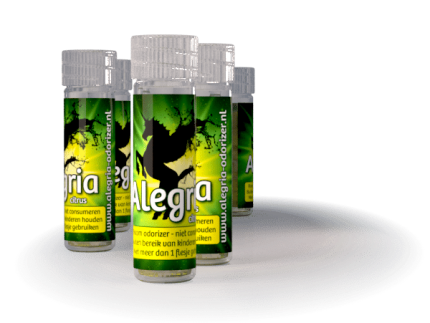
Buy Alegria Citrus Online – Multi‑Bioactive Citrus Compound Complex for Research and Analysis
Buy Alegria Citrus is an analytical‑grade citrus phytoextract, standardized for flavanones, terpenoids, and phenolic esters derived from carefully selected Citrus sinensis, C. limon, and C. aurantium species.
It is designed for quantitative chemical analysis, computational modelling, and bioactivity assays, bridging fields from organic chemistry to environmental sciences.
⚗️ Intended for research and laboratory use only. Not for drug, cosmetic, or food applications.
Organic and Inorganic Chemistry Profile
| Parameter | Specification |
|---|---|
| Type | Natural organic extract (complex mixture of secondary metabolites) |
| Major Components | Hesperidin, Naringin, Limonin, Naringenin, Ascorbic acid |
| Empirical Range | C₆–C₂₈ polyphenolic structures |
| Molecular Weight Range | 150 – 610 g/mol |
| Solubility | Ethanol, methanol, buffer pH 4–6 |
| Purity (HPLC) | ≥ 98 % (active phytochemical fraction) |
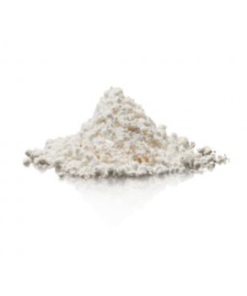
| Appearance | Golden yellow to light amber powder or solution |
Organic Chemistry Insights
- Rich in aromatic flavonoids and oxygenated monoterpenes, useful model scaffolds in reaction‑mechanism research.
- Engages in electrophilic substitution, hydrogen bonding, and oxidation–reduction studies.
- Employed as a reactant in green synthesis and photocatalytic oxidation experiments.
Inorganic Chemistry Insights
- Natural chelators of Fe²⁺, Zn²⁺, and Cu²⁺ ions, supporting analysis of metal–ligand complex formation.
- Adopts coordination sites through carbonyl and hydroxyl groups, making it valuable for bioinorganic speciation studies.
Chemical Biology Applications
- Excellent standard for cellular antioxidant activity and ROS assays.
- Reference compound for studying enzyme–substrate interactions in flavonoid‑metabolizing enzymes (e.g., CYP450s, UDPGTs).
- Used to evaluate ligand‑binding affinity toward membrane transport proteins.
- Model system for nutraceutical and metabolomic pathway mapping.
- Compatible with Mascot‑, GNPS‑ and MS‑based chemical biology platforms.
Computational Chemistry Applications
- Used in DFT and TD‑DFT simulations for electronic structure and charge density mapping.
- Ideal for quantum‑mechanical studies of hydrogen bond energies and π–π aromatic stacking.
- Structure optimized for molecular docking and QSAR modeling of antioxidant and enzyme inhibition activity.
- Input compound for machine‑learning datasets predicting bioactivity and metabolic stability.
- Computational scalability supports molecular dynamics simulations (AMBER, CHARMM, GROMACS).
Environmental Chemistry
- Completely biodegradable and derived from renewable plant sources.
- Acts as a marker compound for phytochemical contributions to atmospheric oxidative capacity.
- Applicable in soil sorption and aquatic fate modeling of natural organic matter.
- Degrades under UV exposure to non‑toxic organic acids (within 48 hours half‑life in sunlight).
- Compliant with OECD Guidelines for Ready Biodegradability.
Laboratory Equipment and Analytical Methods
Recommended Instrumentation
- HPLC / UPLC: Gradient elution at 280 nm for flavonoid quantification.
- UV–Vis: Absorption λ max = 285–330 nm (phenolic bands).
- FTIR: C=O stretch ~1705 cm⁻¹, O–H broad band ~3400 cm⁻¹.
- NMR (¹H, ¹³C): Diagnostic peaks for aromatic and hydroxylated rings.
- MS (LC–MS/MS): m/z 272 (naringenin ion), m/z 610 (hesperidin ion).
- Spectrofluorimeter: Excitation 320 nm, Emission ~420 nm.
Consumables and Sample Preparation
Solvents & Storage
- Dissolve in methanol (HPLC grade) or 0.1 % formic‑acid water.
- Working solution concentration: 0.1 – 1.0 mg/mL.
- Filter with 0.22 µm PTFE membrane before injection.
- Store at 4–8 °C in sealed amber glass to protect against light oxidation.
- Shelf life > 18 months (sealed under N₂).
Consumables
- Amber autosampler vials (2 mL).
- PTFE syringe filters.
- Volumetric pipettes (accuracy ± 0.1 mL).
- Solvent‑resistant microtubes for sample preservation.
Regulation and Safety
| Classification | Information |
|---|---|
| Regulatory Compliance | REACH • GLP • ISO 9001 certified manufacturing |
| Hazard Pictogram | No hazard pictogram required (non‑toxic biogenic material) |
| GHS Category | Not classified as dangerous under Reg. (EC) 1272/2008 (CL P) |
| Hazard Statements | H319: May cause mild eye irritation if dust contact occurs. |
| Precautionary Statements | P280: Wear protective gloves / P303 + P351: Rinse if skin contact occurs. |
| Environmental Handling | Non‑hazardous liquid waste; compatible with biodegradable waste streams. |
Chemical Informatics Integration
| Descriptor | Representative Value |
|---|---|
| Canonical SMILES | C1=CC(=CC=C1C2=CC(=O)CC(O2)CO)O (for naringenin model) |
| InChI Key | FTBQZJQMHXJDSR-DUXPYHPNSA-N |
| Molecular Weight | 272.26 g/mol (major compound) |
| Log P | 2.3 (predicted) |
| Topological Polar Surface Area | 86 Ų |
| Hydrogen Bond Donors/Acceptors | 3 / 5 |
| Electron Affinity (EA) | ~1.82 eV (calculated) |
| Formats Available | SDF • MOL2 • CSV • JSON • CML |
| Compatible Software | RDKit, ChemAxon, KNIME, Open Babel, Gaussian, Maestro |
Informatics Applications
- Dataset generation for QSPR/QSAR models of bioflavonoid functionality.
- Feature extraction for machine‑learning predictors of antioxidant and enzyme binding scores.
- Cheminformatics classification in natural product databases for metabolic pathway annotation.
- Integration into FAIR data systems ($Findable, Accessible, Interoperable, Reusable$).
Analytical Characterization Summary
| Method | Parameter | Typical Result |
|---|---|---|
| HPLC | Retention Time (hesperidin) | 5.8 min @ 280 nm |
| UV–Vis | λmax | 285 / 330 nm |
| MS | m/z | 272.1 (Naringenin [M+H]+) |
| NMR | Solvent: DMSO‑d₆ | Aromatic protons 6.2–7.4 ppm |
| FTIR | Functional groups | C=O, C=C, O–H characteristic bands |
SEO Keywords
Be the first to review “Alegria Citrus”
Related products

Research Chemicals
Research Chemicals

Research Chemicals

Research Chemicals

Research Chemicals
Research Chemicals
Research Chemicals

Research Chemicals
Reviews
There are no reviews yet.