
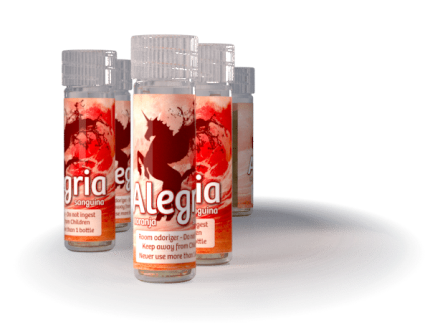
Buy Alegria Naranja Sanguina Online – Natural Bioactive Extract for Advanced Analytical Research
Buy Alegria Naranja Sanguina is a research‑grade extract derived from Citrus sinensis var. sanguina (blood orange), standardized for high anthocyanin, flavonoid, and carotenoid content.
Developed for laboratory, analytical, and computational research, this product serves as a reference standard for natural product chemistry, bioactive compound synthesis, and environmental metabolite analysis.
⚗️ Research use only. Not for human, clinical, or therapeutic application.
Organic and Inorganic Chemistry Profile
| Parameter | Specification |
|---|---|
| Type | Natural organic extract complex |
| Primary Constituents | Anthocyanins (cyanidin‑3‑glucoside), hesperidin, naringin, ascorbic acid |
| Formula (range) | C₁₅–C₂₈ polyphenolics mixture |
| Molecular Weight Range | ~300 – 610 g/mol |
| Solubility | Water, methanol, ethanol, analytical buffers (pH 3–6) |
| Appearance | Deep crimson orange powder or viscous concentrate |
| Purity | ≥ 98 % HPLC (total bioactives) |
| pH (1% solution) | 3.2 ± 0.1 |
Organic Chemistry Insights
- Predominantly polyphenolic, carbon‑based aromatic rings with multiple hydroxyl and glycosidic linkages.
- Enables study of tautomerization, oxidation–reduction reactions, and electrophilic substitution in complex plant metabolites.
- Acts as a source material in derivatization and natural product synthesis.
Inorganic Relevance
- Chelation capacity for Fe²⁺/Cu²⁺ tested as a model for metal‑ion stabilization studies.
- Useful in coordination chemistry assays showing how polyphenols bind metals to form complexes mimicking antioxidant systems.
Chemical Biology Applications
- Standard for metabolomic profiling and bioassay calibration of flavonoids and anthocyanins.
- Used to quantify cellular oxidative stress markers (ROS modulation assays).
- Serves as a control sample for enzyme‑kinetic studies of oxidoreductases.
- Enables binding affinity mapping with plasma proteins and membrane lipids.
- Compatible with mass spectrometry‑based chemical biology profiling workflows.
Computational Chemistry Applications
- Alegria Naranja Sanguina’s flavonoid mixtures are excellent for DFT and semi‑empirical modelling of π–π stacking interactions.
- Infrared and UV–Vis transition calculations validate electronic delocalization and hydroxyl polarization models.
- Used in machine‑learning frameworks for QSPR/QSAR prediction of antioxidant efficacy and log P–solubility relationships.
- Facilitates computational comparisons between mono‑ and poly‑phenolic energy minima.
- Serves as training input for cheminformatics metadata classifiers for natural compounds.
Environmental Chemistry
- Biodegradable and low‑toxicity compound mix suitable for green chemistry education.
- Applied in environmental degradation pathway simulations for organic pollutants.
- Benchmark compound for evaluating soil sorption and aqueous leaching models.
- Demonstrates oxidative fate under UV and pH shift, supporting photo‑oxidation and hydrolysis kinetic studies.
- 100 % derived from renewable plant sources with no synthetic additives or toxic co‑solvents.
Laboratory Equipment and Analytical Methods
Recommended instrumentation for characterization
- HPLC / UPLC (gradient elution) – anthocyanin quantification λ = 520 nm.
- UV‑Vis Spectroscopy – absorbance maxima at 280 nm and 520 nm.
- FTIR – O–H stretch ~3400 cm⁻¹, C=O peak ~1690 cm⁻¹.
- ¹H / ¹³C NMR – aromatic and glycosidic chemical shift identification.
- LC‑MS / MS – m/z 450–600 anthocyanin parent ions.
- TLC – flavonoid fingerprint visualization with AlCl₃ reagent.
Consumables and Sample Preparation
Suggested Solvents & Concentrations
- Methanol (LC‑MS grade) or acidified ethanol (0.1 % formic acid).
- Typical stock solution: 1 mg/mL for UV‑Vis or 0.1 mg/mL for LC‑MS.
- Use PTFE filter (0.22 µm) before injection.
Sample Handling and Storage
- Store below 25 °C in dry, light‑proof, airtight containers.
- Avoid alkaline conditions (pH > 7) to preserve anthocyanin stability.
- Shelf life > 24 months (sealed under nitrogen).
Personal Protective Equipment
- Wear lab coat, gloves, safety glasses; avoid inhalation of fine powder.
Regulation and Safety
| Classification | Information |
|---|---|
| Regulatory Framework | REACH compliant • GLP grade • Not classified as toxic under EU 1272/2008 (CLP) |
| GHS Pictogram | None (applicable only for bulk powder contact irritation) |
| Hazard Statements | H319: Causes eye irritation. H335: May cause respiratory irritation upon aerosolization. |
| First Aid | Rinse eyes with water; seek medical attention if irritation persists. |
| Waste Disposal | Compatible with biodegradable organic waste streams; follow local environmental regulations. |
Chemical Informatics Integration
| Descriptor | Example Value |
|---|---|
| Representative Compound (SMILES) | C1=CC(=CC=C1C=O)O[C@H]2COC(O2)C3=CC=C(C=C3)O (cyanidin model) |
| InChI Key | VIOJOUBIMVKCII-UHFFFAOYSA-N |
| Log P (o/w) | ~1.7 (predicted) |
| Topological Polar Surface Area (TPSA) | 125 Ų (anthocyanin core) |
| Hydrogen Bond Donors/Acceptors | 5 / 8 |
| Cheminformatics Formats | SDF, MOL2, JSON, CSV, CML |
| Software Compatibility | RDKit, KNIME, ChemAxon, MOE, Maestro |
Applications in Chemical Informatics:
- Dataset development for natural product libraries and QSAR/QSPR predictive models.
- Descriptor mapping for antioxidant activity and photostability prediction.
- Integration into FAIR data repositories following OECD metadata standards.
Analytical Characterization Summary
| Method | Parameter | Typical Result |
|---|---|---|
| HPLC | Retention time (anthocyanin) | 7.5 min @ 520 nm |
| UV‑Vis | Absorbance λmax | 280 / 520 nm |
| FTIR | Major bands | ~3400 cm⁻¹ (O‑H), 1690 cm⁻¹ (C=O) |
| NMR | Solvent: DMSO‑d₆ | Multiplets consistent with aromatic rings |
| LC‑MS | Parent ion | m/z ≈ 449 (Cyanidin‑3‑glucoside) |
SEO Optimized Keywords
Be the first to review “Alegria Naranja Sanguina”
Related products
Research Chemicals
Research Chemicals

Research Chemicals

Research Chemicals
Research Chemicals
Research Chemicals

Research Chemicals
Research Chemicals
Reviews
There are no reviews yet.