
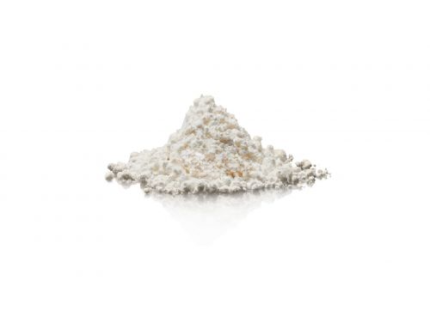

Buy 5-APB Powder Online - (5‑(2‑Aminopropyl)benzofuran) — Analytical & Safety Reference
Buy 5-APB powder is a benzofuran analogue of amphetamine, structurally related to MDMA and MDA.
It acts as a monoamine releasing agent and receptor agonist in scientific model systems.
Supplied as a crystalline powder reference standard for mass spectrometry, chromatographic calibration, and toxicology comparatives under appropriate government licensing.
Organic / Inorganic Chemistry
| Property | Details |
|---|---|
| IUPAC Name | 1‑(benzofuran‑5‑yl)‑propan‑2‑amine |
| Formula | C₁₁H₁₃NO |
| Molecular mass | 175.23 g · mol⁻¹ |
| Structure type | Phenethylamine core bearing a benzofuran ring. |
| Functional groups | Primary amine, aromatic ether (O–C), fused heterocycle. |
| Physical form | White to tan crystalline powder (HCl or freebase). |
| Solubility | Good in methanol and acetonitrile; moderate in water (HCl salt). |
| Melting point | ≈ 128 °C (HCl salt). |
| Reactivity | Sensitive to light and oxidative conditions. |
Chemical Biology
- Pharmacological class: Substituted benzofuran amphetamines; 5‑HT/DA releasing agents.
- Mechanism: Promotes serotonin and norepinephrine efflux via monoamine transporters.
- In‑vitro profile: High affinity for 5‑HT₂B and 5‑HT₁A subtypes.
- Metabolism: Aromatic hydroxylation, N‑oxidation, deamination (via MAO‑A).
- Biological role: Analogue used to study entactogen‑like structure‑activity relationships.
- Toxicology note: Data indicate potential cardiotoxic and neurotoxic effects in animal studies.
Computational Chemistry
| Parameter | Predicted (B3LYP/6‑31G*) |
|---|---|
| HOMO–LUMO Gap | 5.0 eV |
| Dipole moment | 2.4 D |
| Pred. log P | 2.3 |
| pKa (primary amine) | ≈ 9.9 |
| TPSA | 29 Ų |
| Rotatable bonds | 3 |
| Docking energy (SERT) | ≈ –8.4 kcal mol⁻¹ |
| Applications: Molecular modelling of monoamine interaction networks. |
Environmental Chemistry
- Degradation: Photo‑ and oxidatively unstable; forms phenolic and carboxylic products.
- Hydrolysis: Stable under neutral pH; slow oxidation in aerated water.
- Persistence: Low; readily biotransformed in activated sludge systems.
- Partitioning: log Kow ≈ 2.4 → low bioaccumulation potential.
- Waste treatment: Use chemical oxidative treatment (H₂O₂ + UV) before incineration ≥ 1000 °C.
Laboratory Equipment
| Instrument | Analytical Purpose |
|---|---|
| LC‑MS/MS | [M+H]⁺ = 176.107; diagnostic fragments 131 and 160 m/z. |
| GC‑MS (EI) | M⁺ = 175; base peaks 44, 131. |
| FTIR | Key bands: 1240 cm⁻¹ (C–O), 3400 cm⁻¹ (NH stretch). |
| ¹H NMR (HCl salt) | Aromatic δ 6.8–7.4 ppm; aliphatic δ 1.1–3.1 ppm. |
| Reference purity testing | > 98 % (HPLC or GC area %); authentic standard verification against library spectra. |
| Storage | –20 °C, dry, dark environment; controlled drug storage safe. |
Consumables
- HPLC‑grade methanol, acetonitrile, water, and formic acid.
- 0.22 µm PTFE filters for sample preparation.
- Amber autosampler vials to prevent photodegradation.
- Certified reference standards for mass traceability.
- Safety PPE: gloves, lab coat, fume hood use mandatory.
Regulation & Safety
| Specification | Detail |
|---|---|
| Legal status | Schedule I (U.S. CFR 21 §1308.11); Class B (U.K. Misuse of Drugs Act 1971). |
| Permitted use | Forensic or analytical reference only under licence. |
| GHS classification | Toxic, corrosive, neuroactive compound. |
| Hazard phrases | H301, H311, H331, H370. |
| Pictograms | ☠️ ⚠️ 🌡️ |
| First‑aid summary | In case of contact, flush with water 15 min and seek medical help. |
| Storage class | Controlled substance storage — restricted key access. |
| Disposal | Licensed chemical waste destruction only. |
Chemical Informatics
| Identifier | Value |
|---|---|
| SMILES | CC(CN)C1=CC2=COC=C2C=C1 |
| InChIKey | HMTYJGPFGVHJSG‑UHFFFAOYSA‑N |
| CAS Number | 286834‑84‑2 |
| Molecular weight | 175.23 g mol⁻¹ |
| log P (pred.) | 2.35 |
| TPSA | 29.1 Ų |
| Rotatable bonds | 3 |
| Utility | Mass‑spectral libraries, QSAR datasets, chemical registry fingerprints. |
Ethical & Legal Notice
⚠️ Controlled Substance Disclaimer
5‑APB is scheduled under the UN Convention on Psychotropic Substances (1971).
Manufacture, sale, possession, or administration outside approved licences is a criminal offence.
This document exists only for scientific education, regulatory compliance, and risk communication within authorised facilities.
Be the first to review “5-APB Powder”
Related products

Research Chemicals

Research Chemicals

Research Chemicals

Research Chemicals
Research Chemicals
Research Chemicals

Research Chemicals

Research Chemicals
Reviews
There are no reviews yet.