

Buy Deschloroketamine (DCK) Powder Online — High‑Purity Analytical Reference for Advanced Research
Overview
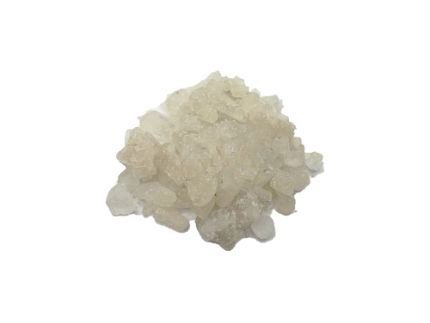
Buy Deschloroketamine (DCK) powder, also known as 2‑Oxo‑PCM or 2‑Oxo‑2‑phenylcyclohexanamine, is a research‑grade arylcyclohexylamine developed for analytical chemistry, molecular modeling, and environmental fate investigations.
Supplied as an ultra‑fine crystalline powder, DCK is optimized for spectroscopic calibration, quantum chemical analysis, and chemical reactivity research.
⚠️ For laboratory or research use only. Not for human or veterinary application.
Chemical Identity
- Chemical Name: Deschloroketamine
- Synonyms: 2‑Oxo‑2‑phenylcyclohexanamine, DCK, 2‑Oxo‑PCM
- Chemical Class: Arylcyclohexylamine derivative (organic ketone–amine compound)
- Molecular Formula: C13H17NO
- Molecular Weight: 203.28 g/mol
- Purity: ≥ 98% (verified by HPLC + GC–MS)
- Physical State: Fine crystalline powder
- Appearance: White/off‑white
- Grade: Analytical (ISO 9001:2015 certified production)
Applications Across Chemistry Disciplines
Organic & Inorganic Chemistry
- A structural analog of arylcyclohexanones, useful as a reference material for studying amine–ketone equilibria and aromatic substitution kinetics.
- Provides insight into reduction and condensation reaction pathways, hydrogen bonding, and functional group reactivity (C=O, C–N, Ar–H).
- Serves as a high‑fidelity NMR, FTIR, and mass‑spectral reference for cyclohexanone‑based amine derivatives.
- Supports inorganic complex formation studies, exploring nitrogen and oxygen coordination to transition‑metal centers.
Chemical Biology
- Enables enzyme‑mimetic modeling of amine oxidation and carbonyl reduction reactions.
- Assists in polar surface area and lipophilicity (log P) correlation studies for in silico ADMET predictions.
- Utilized in biotransformation simulations (nonclinical) to understand O‑demethylation analogues in theoretical metabolic models.
- Used in research on environmentally relevant bio‑oxidative degradation mechanisms for amine–ketone systems.
Computational Chemistry
- Benchmark compound for Density Functional Theory (DFT) calculations and wavefunction analyses.
- Commonly employed in energy‑surface optimization, conformer stability prediction, and electrostatic potential mapping.
- Serves as a case model in molecular docking validation, quantum descriptor evaluation, and charge‑density distribution simulations.
- Integrated in AI/ML datasets for QSAR and molecular property prediction using cheminformatics descriptors.
Environmental Chemistry
- Reference standard for hydrolytic stability, aqueous solubility, and biodegradation half‑life (t½) determination under varying pH conditions.
- Supports LC–MS/MS calibration for trace detection of arylamine environmental contaminants.
- Used in adsorption/desorption studies on soil minerals and partition coefficient (Kₒw, Koc) determinations.
- Contributes to pollution modeling of nitrogen‑containing organics and photo‑oxidation studies under UV exposure.
Laboratory Equipment & Consumables
Essential analytical and preparation equipment:
- Analytical microbalance (± 0.1 mg precision)
- High‑Performance Liquid Chromatography (HPLC or LC–MS/MS) system
- Fourier Transform Infrared (FTIR) spectrometer for carbonyl group analysis
- ¹H/¹³C NMR system for structural confirmation
- UV–Visible spectrophotometer for absorbance behavior analysis
- Dry desiccators, inert‑gas storage system, and PTFE‑lined sample containers
- HPLC‑grade solvents (methanol, acetonitrile, ethanol, DCM)
- Laboratory consumables conforming to ISO 17025 and REACH Annex II safety requirements
Regulation & Safety
- Intended Use: Authorized for research and analytical determination only. Not for use in humans, animals, or clinical trials.
- Regulatory Notes: May be controlled or restricted under certain national research chemical regulations. Verification of compliance is mandatory before purchase or import.
Indicative GHS Classification:
⚠️ Acute Toxicity (Oral/Inhalation) – Category 4
⚠️ Skin Irritation – Category 2
⚠️ Eye Irritation – Category 2A
⚠️ Hazardous to aquatic life, chronic – Category 3
Safety Precautions
- Handle with gloves, goggles, and lab coat under fume hood conditions.
- Avoid dust production or direct skin contact.
- Dispose of residues and solvent waste via authorized chemical waste channels.
- Store under inert atmosphere, protected from humidity and light exposure.
Quality & Documentation:
- Supplied with Safety Data Sheet (SDS), Certificate of Analysis (CoA), and batch traceability report.
- Manufactured following ISO 9001:2015 and Good Laboratory Practice (GLP) guidelines.
- Full REACH/CLP documentation available upon request.
Chemical Informatics & Data Management
- Delivered with SMILES, InChI, and InChIKey data formats.
- Dataset compatible with ChemAxon Marvin, RDKit, KNIME, and Open Babel for cheminformatics workflows.
- Ideal for LIMS (Laboratory Information Management System) integration and AI/ML compound database curation.
- Includes molecular descriptors, polar surface area, rotatable bond count, and topological polar index data for computational research.
Analytical Verification & Quality Control
- HPLC assay: ≥ 98% purity (retention index consistent across batches)
- GC–MS fingerprint: Ion fragments confirm structural identity
- ¹H / ¹³C NMR: Aromatic + aliphatic chemical shift agreement with literature data
- FTIR: Strong C=O band at ~1705 cm⁻¹; amine stretch ~3300 cm⁻¹
- Thermal analysis (TGA/DSC): Stable 20–180 °C
- Moisture content: < 0.2 % (Karl Fischer titration)
Storage & Stability
- Store in airtight, opaque container between 15–25 °C.
- Protect from light, air, and moisture—preferably under dry nitrogen.
- Shelf life: 24 months under controlled laboratory conditions.
SEO Keywords (Optimized)
Be the first to review “DeschloroKetamine (DCK) Powder”
Related products

Research Chemicals

Research Chemicals
Research Chemicals

Research Chemicals
Research Chemicals

Research Chemicals
Research Chemicals

Research Chemicals
Reviews
There are no reviews yet.