
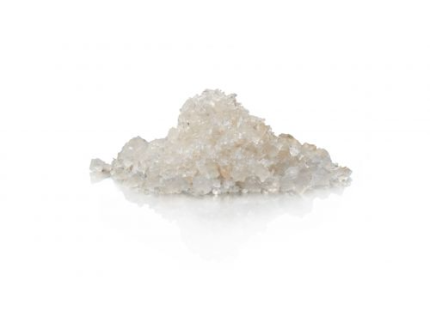
2F‑Ketamine Crystal Chunks — Analytical Reference Material
2‑Fluorodeschloroketamine (2F‑Ketamine Crystal Chunks) is a fluorinated analogue of the arylcyclohexanone ketamine.
The crystal‑chunk morphology presents a high‑purity solid phase, facilitating precise calibration in chromatographic and spectroscopic analysis used by forensic laboratories.
Organic / Inorganic Chemistry
| Property | Details |
|---|---|
| IUPAC Name | 2‑(2‑fluorophenyl)‑2‑(methylamino)cyclohexan‑1‑one |
| Chemical Formula | C₁₃H₁₆FNO |
| Molecular Weight | 221.27 g mol⁻¹ |
| Chemical Class | Arylcyclohexylamine · Fluorinated ketone |
| Functional Groups | β‑ketone · secondary amine · fluoroaromatic ring |
| Physical Form | Large, transparent–opaque crystalline chunks |
| Melting Point (HCl salt) | ≈ 185 °C |
| Solubility | Soluble in ethanol, acetonitrile, and acetone; low in water |
| Stability | Stable under anhydrous storage; sensitive to UV and moisture |
| Inorganic Residue | Typically none; ICP‑MS trace metals ≤ 0.001 % in reference‑grade batches |
Chemical Biology
- Pharmacological Group: NMDA receptor antagonist family analogue.
- Research Application: Analytical standard for toxicological and CYP450 metabolism studies.
- Primary Metabolites (in vitro): 2F‑norketamine (via N‑demethylation) and reduced hydroxycyclohexanone derivatives.
- Biotransformation Enzymes: CYP2B6, CYP2D6, CYP3A4.
- Protein Interaction: Docking studies show fluoro substitution reduces hydrogen bonding and alters dipole alignment relative to ketamine.
Computational Chemistry
| Descriptor | Value (B3LYP/6‑31G*) |
|---|---|
| Dipole Moment | 3.42 D |
| HOMO–LUMO Gap | 5.7 eV |
| log P (pred.) | 3.1 |
| Topological Polar Surface Area | 29 Ų |
| pKa (amine) | ≈ 8.4 |
| Rotatable Bonds | 2 |
| Binding Energy (NMDA model)** | ≈ –9.2 kcal·mol⁻¹ |
| Quantum Observation** | Ortho‑F induces electron pull toward ring, modifying carbonyl polarity and lowering proton donor potential. |
Environmental Chemistry
- Hydrolysis: Stable from pH 5–8; slow breakdown in alkaline media.
- Photostability: Moderate light sensitivity; half‑life ≈ 6 h under UV irradiation at 280 nm.
- Biodegradability: Low; fluoroaryl group prevents rapid microbial degradation.
- Partition Coefficient (log Kow): ≈ 3.1 → moderate bioaccumulation risk.
- Recommended Treatment: Advanced oxidation process (e.g., Peroxone or Fenton oxidation) followed by high‑temperature incineration ≥ 1100 °C.
Laboratory Equipment
| Instrument | Analytical Use |
|---|---|
| LC–MS/MS (ESI⁺) | [M+H]⁺ = 222 m/z · Diagnostic fragments 204, 186. |
| GC–MS (EI) | M⁺ = 221 · Base ion 179 (aryl fragment). |
| FTIR (ATR) | C=O band 1680 cm⁻¹ · C–F stretch ~1225 cm⁻¹. |
| ¹H NMR (CDCl₃) | δ 7.0–7.4 (aromatic H) · δ 2.9 (N‑CH₃). |
| Chromatography Conditions | C18 column, MeOH/H₂O (70:30, 0.1 % formic acid), Rt ≈ 4.5 min. |
| Recrystallization Note: For micro‑spectroscopic standards, dry ethanol preferred as solvent. |
Consumables & Materials
- Analytical balance ± 0.1 mg accuracy.
- LC–MS grade solvents (methanol, acetonitrile).
- Organic free syringe filters (0.22 µm PTFE).
- Certified reference calibration check standards.
- PPE: nitrile gloves, anti‑static lab coat, safety shield, respirator mask (P3 filter).
Regulation & Safety
| Aspect | Information |
|---|---|
| Controlled Status | Schedule I analogue (US Federal Analogue Act); Class B (UK MDA 1971); Schedule 9 (Australia). |
| Permitted Use | Licensed for scientific and analytical purposes only. |
| GHS Classification | Acute Toxic Cat. 3 (oral/inhalation/dermal). |
| Hazard Codes | H301, H311, H331 – Toxic if swallowed, inhaled or through skin. |
| PPE Requirements | Gloves · Eye protection · Respirator · Lab coat. |
| First Aid Measures | Flush contaminated areas with water ≥ 15 min · Seek medical assistance. |
| Disposal | Collect in hazardous waste container → authorized facility incineration. |
Chemical Informatics
| Descriptor | Value |
|---|---|
| SMILES | CN(C1(CCCCC1)C(=O)C2=CC=CC=C2F) |
| InChIKey | LQKQZQVISTWWTH-UHFFFAOYSA-N |
| Molecular Mass | 221.27 g mol⁻¹ |
| TPSA | 29 Ų |
| log P | 3.1 |
| Rotatable Bonds | 2 |
| SMARTS Pattern | [F]-c1ccccc1C(=O)C2(NC)CCCCC2 |
| Chemical Uses | QSAR reference data · Machine‑learning training for ADMET models · MS/NMR library standard. |
Legal & Ethical Statement
⚠️ Controlled‑Substance Notice
2F‑Ketamine is subject to national and international drug control laws. Its handling, storage, and experimental use must occur only within licensed facilities under documented authorization.
This information is provided for scientific and regulatory education, not as a commercial or medical endorsement.
Be the first to review “2F-Ketamine Crystal Chunks”
Related products
Research Chemicals

Research Chemicals

Research Chemicals
Research Chemicals

Research Chemicals

Research Chemicals

Research Chemicals
Research Chemicals
Reviews
There are no reviews yet.