
Buy EPT Fumarate Online — Analytical‑Grade Research Salt for Chemical and Computational Studies
Overview
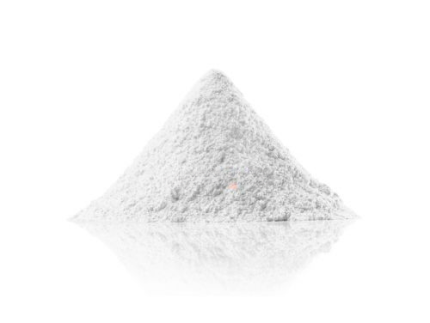
Buy EPT Fumarate is a high‑purity fumaric acid salt of a tertiary amine organic base, synthesized and verified for advanced analytical, computational, and structural chemistry applications.
Its fumarate counterion and nitrogen‑bearing organic component make it highly suited for molecular modeling, ion‑pairing studies, and physicochemical property analysis.
Formulated exclusively for laboratory research and chemical characterization, this material is not intended for human or veterinary use.
Chemical Identity
- Chemical Class: Tertiary‑amine fumarate salt (organic nitrogen compound)
- Counterion: Fumaric acid (HOOC‑CH=CH‑COOH; trans‑butenedioic acid)
- General Formula (conceptual): CₙHₘNO · C₄H₄O₄
- Molecular Weight: Variable by amine component; fumarate anion shared reference = C₄H₄O₄ (116.07 g/mol)
- Purity: ≥ 98% (HPLC verified)
- Form: Crystalline or fine powder salt
- Packaging: Sealed, nitrogen‑flushed amber glass vial, batch‑coded
Applications Across Disciplines
Organic & Inorganic Chemistry
- Used in acid–base equilibrium studies, salt formation kinetics, and amine protonation state analysis.
- Valuable in experiments focusing on hydrogen‑bonding motifs, crystal lattice stability, and proton transfer mechanisms.
- The fumarate component enables redox reaction monitoring, while the tertiary amine contributes to nucleophilic substitution and stereochemical conformer studies.
- In inorganic hybrid materials research, EPT Fumarate assists as a reference in metal‑ion complexation and co‑crystallization systems.
Chemical Biology
- Explored as a reference molecule in biochemical pathway modeling of amine–acid ion pairs and metabolic neutralization dynamics.
- Supports simulations of amine salt solubility, diffusion, and binding energy in aqueous and lipid phases.
- Used in protein interaction mapping for identifying ionic bridge formation in active‑site modeling (computational research only).
Computational Chemistry
- Benchmark compound for Density Functional Theory (DFT) and Hartree–Fock calculations on proton transfer and hydrogen bonding.
- Used to model salt lattice energies, electrostatic potential surfaces, and solvation free energies.
- Integrated into molecular dynamics (MD) and Monte Carlo simulations for exploring ion–dipole interactions and conformational energetics.
- Suitable for machine learning datasets concerning pKa prediction, crystal stability modeling, and charge‑distribution mapping.
Environmental Chemistry
- Enables research into salt dissociation and biodegradation pathways of fumarate and tertiary‑amine species in soil and aquatic systems.
- Reference compound for persistence, bioaccumulation, and transformation rate assessment in regulatory testing frameworks.
- Contributes to analytical validation in LC–MS/MS environmental residue detection and partition coefficient (Log Kₒw) assessment for salt‑form organics.
Laboratory Equipment & Consumables
To ensure reproducibility, recommended instruments and materials include:
- Analytical or microbalance (0.1 mg sensitivity)
- High‑performance liquid chromatography (HPLC) for purity and retention analysis
- Fourier Transform Infrared Spectroscopy (FTIR) for carbonyl and amine fingerprinting
- ¹H and ¹³C NMR spectrometers for salt ratio confirmation
- Karl Fischer titration or moisture analyzers for hydration content
- Desiccators, amber vials, and PTFE‑lined closures for sample storage
- Certified HPLC‑grade solvents (ethanol, methanol, acetonitrile, DMSO)
Consumables should conform to ISO 17025 laboratory standards.
Regulation & Safety
- Intended Use: Restricted to scientific research and analytical testing. Not approved for human consumption or therapeutic application.
- Legal Considerations: Verify jurisdiction‑specific classification relating to amine derivatives and research chemical compounds prior to import or use.
GHS Classification (indicative):
⚠️ Eye Irritant 2A ⚠️ Skin Irritant 2 ⚠️ Aquatic Chronic 3
Precautionary Measures:
- Handle in fume hoods with gloves, coat, and protective eyewear.
- Avoid exposure to air humidity; the salt may deliquesce.
- Dispose via approved chemical waste systems according to EPA / REACH / CLP regulations.
Documentation:
- Supplied under ISO 9001:2015 certified facility.
- Each lot provided with Safety Data Sheet (SDS), Certificate of Analysis (CoA), and Traceability Report.
- Follows REACH, GHS, and IFRA chemical safety documentation protocols.
Chemical Informatics & Data Integration
- Delivered with full SMILES, InChI, and InChIKey identifiers for cheminformatics integration.
- Metadata compatible with ChemAxon, RDKit, KNIME, and OpenBabel platforms.
- Structured for inclusion in Electronic Lab Notebooks (ELN) and Laboratory Information Management Systems (LIMS).
- Standardized descriptors provided for QSAR modeling, molecular docking libraries, and AI‑driven compound property optimization.
Analytical Verification & Quality Control
- Verified through HPLC peak profiling and retention factor reproducibility.
- ¹H/¹³C NMR used to confirm fumarate ratio and identity.
- FTIR carbonyl region (~ 1700 cm⁻¹) confirms fumaric acid component.
- Thermal gravimetric analysis (TGA) and differential scanning calorimetry (DSC) applied for stability characterization.
- Elemental composition tested to ± 0.3% error margin.
Storage & Stability
- Store between 15–25 °C, protected from light and atmospheric moisture.
- Keep containers tightly sealed in a dry, inert environment (nitrogen or argon atmosphere recommended).
- Shelf life: 24–36 months under controlled laboratory conditions.
SEO Keywords (Optimized)
Be the first to review “EPT Fumarate”
Related products
Research Chemicals
Research Chemicals

Research Chemicals
Research Chemicals

Research Chemicals

Research Chemicals

Research Chemicals
Research Chemicals
Reviews
There are no reviews yet.