

Buy Beta-k-2C-B βk-2C-B 80mg Blister Online
Overview
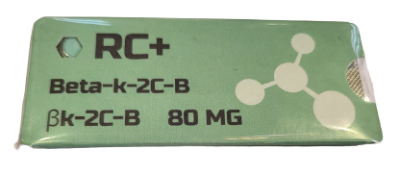
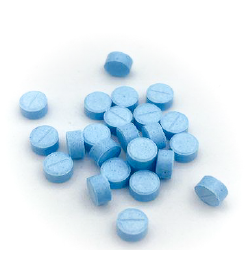
Beta-k-2C-B βk-2C-B 80mg Blister (Beta‑keto‑2C‑B) is a phenethylamine‑derived arylalkylamine belonging to the β‑keto substituted 2C series.
The compound is intended solely as a reference standard to support instrumental method development, chromatographic calibration, and theoretical molecular research.
⚗️ Analytical Research Use Only – Not for human or veterinary application.
Supplied in controlled 80 mg blisters for precision handling and traceability.
Organic and Inorganic Chemistry Profile
| Property | Specification |
|---|---|
| Chemical Name | 2‑amino‑1‑(4‑bromo‑2,5‑dimethoxyphenyl)ethan‑1‑one |
| Molecular Formula | C10H12BrNO3 |
| Molecular Weight | 290.11 g/mol |
| IUPAC Class | β‑Keto Phenethylamine Derivative |
| Purity | ≥ 98 % (HPLC/GC–MS validated) |
| Physical Form | Crystalline solid, off‑white to light beige |
| Packaging | Sealed 80 mg per blister strip, nitrogen flushed |
Organic Chemistry Context:
- Features a β‑keto moiety adjacent to an aromatic system with bromo‑substitution and methoxy donor groups.
- Useful for studying electrophilic substitution, oxidative de‑bromination, and carbonyl stability mechanisms.
- Provides an excellent example of resonance effects and C–Br bond reactivity in organobromine chemistry.
Inorganic Relevance:
- The bromine atom acts as an X‑ray‑identifiable marker for metal–halogen interaction or organometallic complexation studies, especially with Cu²⁺ and Pd²⁺ ions.
Chemical Biology
- Serves as a non‑biological template in studies of amine oxidation, N‑acetyl metabolism, and phenolic O‑methyl transfer reactions.
- Enables structure–activity relationship (SAR) analysis within halo‑substituted phenethylamine series for virtual biochemical screening.
- Supports modeling of ligand‑binding geometry for amine transporters and enzymes using in silico approaches.
- Applied in chemical biology for protein–small molecule docking simulations — without bioassays or pharmacological testing.
Computational Chemistry Applications
- Widely used for Density Functional Theory (DFT) and Molecular Orbital studies of halogenated aromatic systems.
- Investigated for:
- HOMO–LUMO gap analysis
- Electrostatic potential mapping (MEP)
- Vibrational frequency predictions
- Solvation energetics in methanol and water media - Ideal for training QSAR/QSPR models in chemical informatics platforms (e.g., RDKit, KNIME, Schrödinger).
- The presence of both EWG (Br) and EDG (OCH₃) groups provides complex polarization behavior valuable for quantum mechanical benchmarking.
Environmental Chemistry
- Reference compound for wastewater trace analysis and forensic environmental monitoring using LOD ≤ 10 ng/L (LC‑MS/MS).
- Employed in studies on photolytic degradation, advanced oxidation (OH radical) kinetics, and halogen loss pathways.
- Used to test adsorption onto activated carbon and zeolite surfaces in pollutant modeling.
- Supports environmental chemistry curricula on emerging aromatic halogenated organics.
Laboratory Equipment and Analytical Methods
Instrumentation
- HPLC/UPLC for purity profiling and retention factor measurement.
- GC–MS and LC‑HRMS for fragmentation analyses (m/z = 291 [M+H]⁺).
- FTIR for C=O stretch (1700–1685 cm⁻¹) and C–Br band (~610 cm⁻¹).
- ¹H/¹³C NMR for methoxy and α‑carbon chemical shift confirmation.
- UV‑Vis for π → π* transitions in methanolic solution (~225 nm).
Consumables and Preparation
- Analytical Solvents: acetonitrile, methanol, and chloroform (HPLC grade).
- Glassware: amber autosampler vials with PTFE‑sealed caps.
- Microbalances: precision ± 0.1 mg for sample standardization.
- Safety Supplies: nitrile gloves, lab coat, fume hood ventilation, and eye protection.
- Store prepared solutions below 8 °C and protect from UV light to avoid oxidation.
Regulation and Safety
Regulatory Status
- Classified as a research chemical standard and may be controlled in certain jurisdictions (2C‑series analogue legislation).
- Distribution restricted to registered R&D entities and licensed analytical centers.
- Fully complies with GHS and REACH data requirements for laboratory use.
Hazard Classification (GHS Indicative):
- H315: Causes skin irritation
- H319: Causes serious eye irritation
- H335: May cause respiratory irritation
- H410: Very toxic to aquatic life with long‑lasting effects
Safety Guidelines
- Avoid dust formation and inhalation.
- Do not release into drainage systems.
- Disposal must follow OECD/EPA guidelines for halogenated organic waste.
- MSDS and CoA supplied with each lot for traceability.
Chemical Informatics Data
| Field | Value |
|---|---|
| SMILES | COC1=CC(Br)=C(C(C=O)N)C(OC)=C1 |
| InChI Key | VUSDPJCNNTXYQY-UHFFFAOYSA-N |
| Molecular Weight (MW) | 290.11 |
| TPSA | 49.5 Ų |
| Log P (calc.) | 2.86 |
| Rotatable Bonds | 3 |
| Data Formats | MOL, SDF, CSV, JSON (LIMS/FAIR compatible) |
| Software Integration | RDKit, ChemAxon, Schrödinger, KNIME, Open Babel |
Such cheminformatics-ready metadata facilitates integration into toxicology models, spectral databases, and virtual screening repositories.
Storage and Stability
- Store below 25 °C in a dry, dark environment under inert gas protection.
- Shelf life ≥ 24 months when unopened.
- Avoid extended moisture exposure — the β‑keto group can undergo slow hydration under humid conditions.
Analytical Characterization Summary
| Parameter | Method | Typical Result |
|---|---|---|
| HPLC Purity | C18 gradient (220 nm) | ≥ 98 % |
| Mass Spec Ion | ESI‑MS (+ve) | m/z 291 [M+H]⁺ |
| FTIR | ATR mode | C=O 1745 cm⁻¹, C–Br 610 cm⁻¹ |
| UV λmax | Methanol solution | 225 – 230 nm |
| Appearance | Off‑white crystalline powder |
SEO Optimized Keywords
Be the first to review “Beta-k-2C-B βk-2C-B 80mg Blister”
Related products

Research Chemicals

Research Chemicals

Research Chemicals
Research Chemicals
Research Chemicals

Research Chemicals
Research Chemicals

Research Chemicals
Reviews
There are no reviews yet.